Let’s face it—skincare labels can be more confusing than your grandma’s secret cookie recipe. But fear not! We’re here to demystify the science behind pH-balanced skincare, with a dash of humor and a sprinkle of real science.
🧬 What the pH?
First things first: pH stands for “potential hydrogen,” which measures how acidic or alkaline a substance is on a scale from 0 to 14. Here’s the breakdown:
- 0-6: Acidic (think lemon juice)
- 7: Neutral (like pure water)
- 8-14: Alkaline (like baking soda)
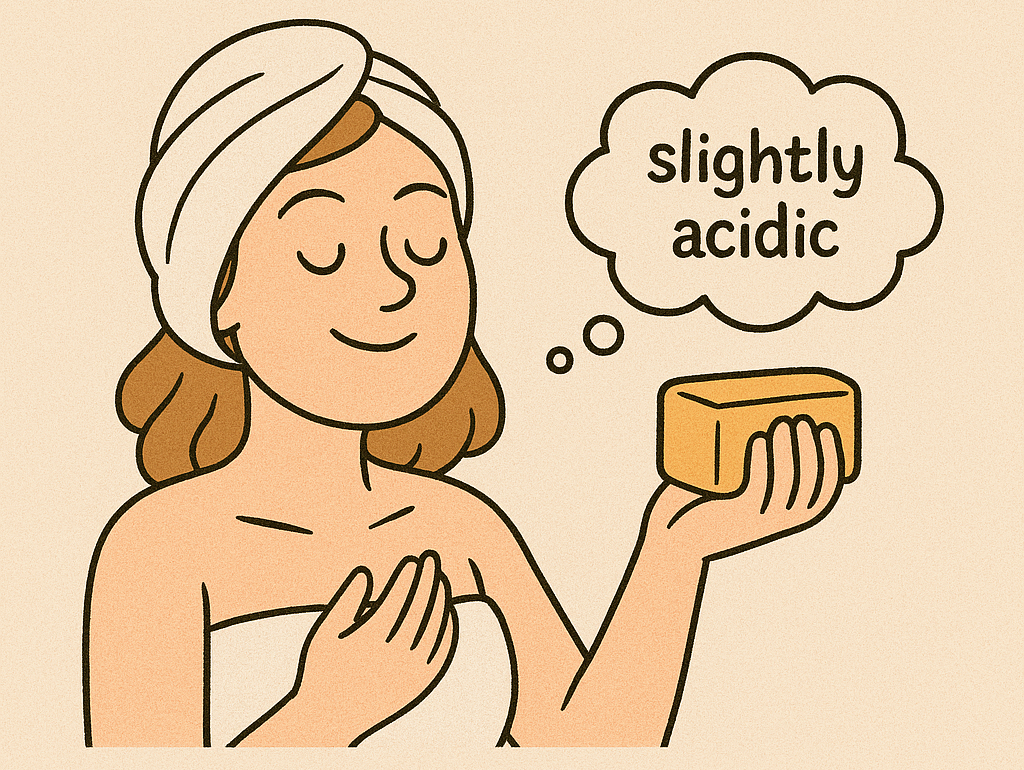
Your skin’s natural pH hovers around 4.7 to 5.75, making it slightly acidic. This acidity forms the “acid mantle,” a protective layer that keeps out harmful bacteria and locks in moisture .
🧼 The Soap Opera: When pH Goes Awry
Using products with a high pH (alkaline) can strip away your skin’s natural oils, leading to dryness, irritation, and even breakouts. It’s like inviting a bull into a china shop—chaos ensues.
A study published in the International Journal of Cosmetic Science found that skin with a pH below 5.0 is in better condition than skin with a pH above 5.0, showing improved barrier function and hydration .
🧴 The Balancing Act: Choosing the Right Products
To maintain your skin’s natural pH:
- Avoid: Harsh soaps and cleansers with high pH levels.
- Opt for: Gentle, pH-balanced products that support your skin’s acid mantle.
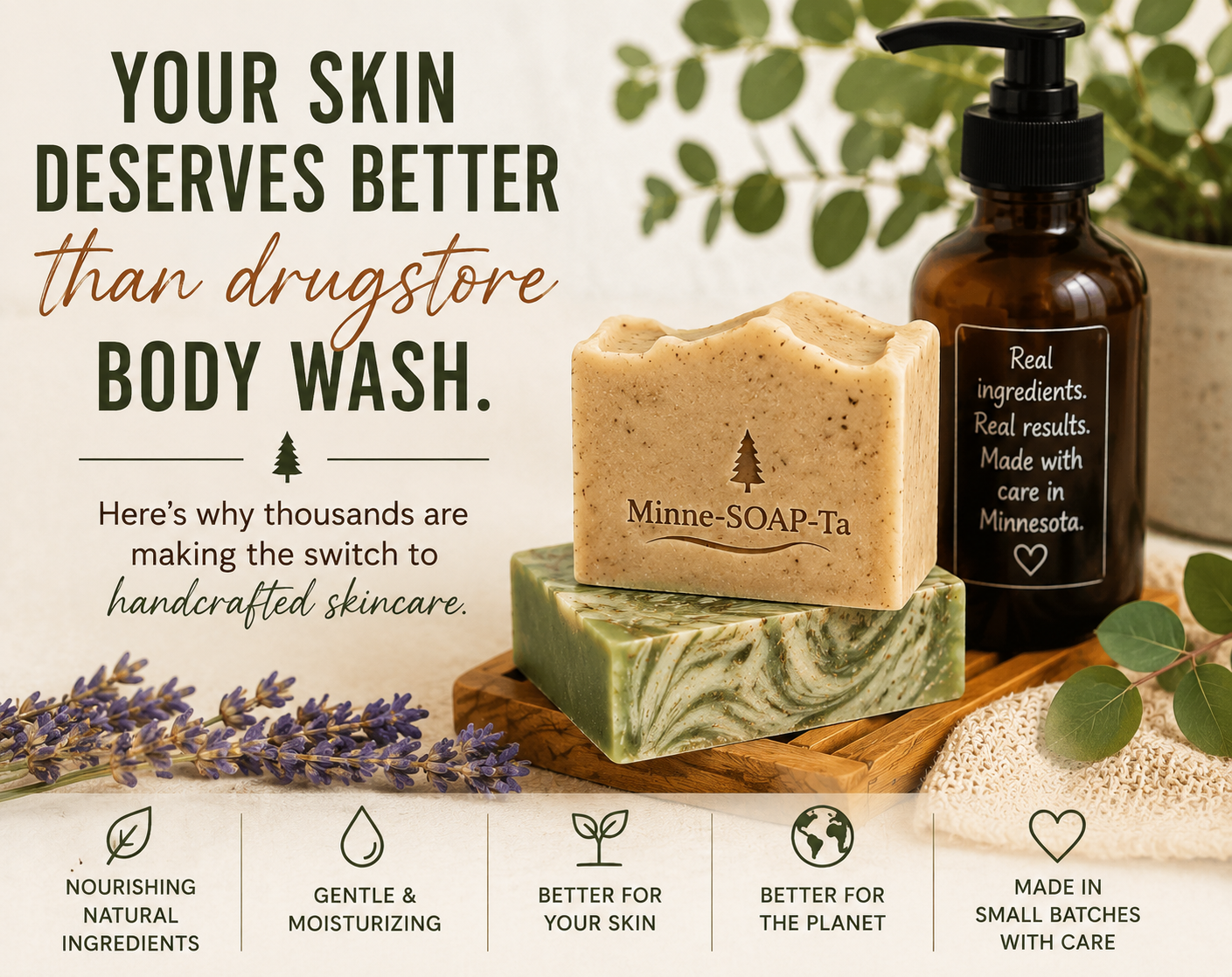
This is where Minne-SOAP-Ta comes in. Our natural soaps are crafted to align with your skin’s pH, ensuring a gentle yet effective cleanse without disrupting your skin’s harmony.
🧖♀️ The Final Lather
Understanding pH isn’t just for chemistry class—it’s essential for healthy skin. By choosing pH-balanced products, you’re giving your skin the care it deserves.
So, next time you’re shopping for skincare, remember: your skin prefers a latte (pH-wise) over a lye bath.
Ready to treat your skin right?
Explore our range of pH-friendly soaps at mnsoap.com.
References: